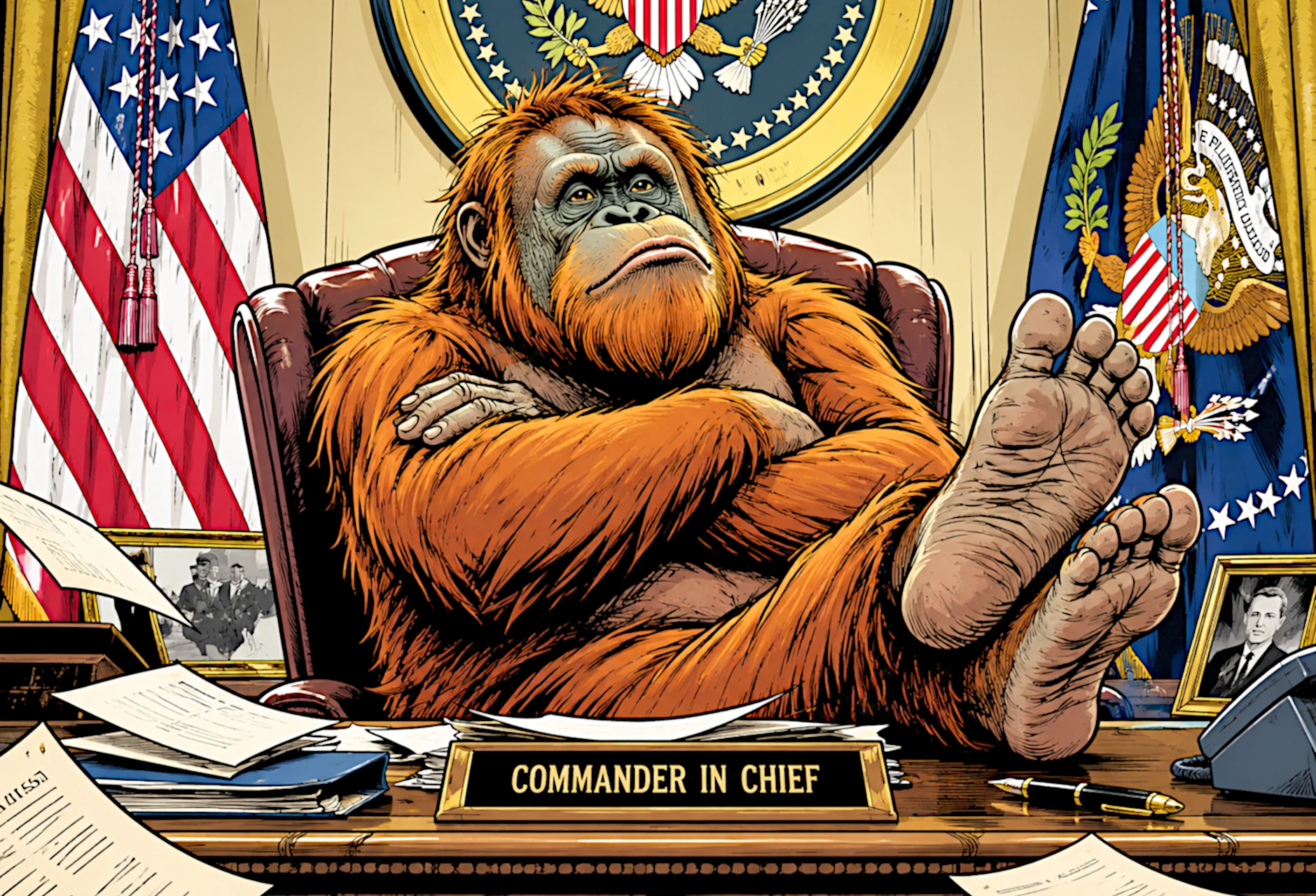
There is a phrase that has become increasingly familiar in European political debate: “American conditions.”
It is rarely meant as a compliment.
The phrase can mean many things: greater inequality, weaker social protections, private healthcare, political polarisation, harsher immigration enforcement, or a society in which economic power determines too much of a person’s opportunities.
What makes the expression striking is that America is not an enemy.
For generations, the United States has been one of Europe’s closest allies: a military partner, an economic powerhouse, a technological leader and, above all, a fellow democracy. Europeans have often looked across the Atlantic with a mixture of admiration and anxiety, seeing in America both a model of dynamism and a warning about where market-driven politics can lead.
But something has changed.
Increasingly, the United States itself is becoming part of the warning.
From ally to cautionary tale
The change is not simply about trade, defence spending or foreign policy. It is about something more fundamental: what Europeans expect from a democracy and from an ally.
The current U.S. administration has made tariffs a central instrument of economic and foreign policy. On July 24, new Section 301 duties took effect on imports from dozens of economies, including the European Union. For EU goods covered by the measure, the new duty generally brings the combined MFN and Section 301 tariff to 10 percent where the existing MFN rate is below 10 percent; goods already subject to an MFN rate of 10 percent or more receive no additional Section 301 duty. (USTR)
The technical details matter. But the larger political message is difficult to miss: Washington is increasingly willing to use access to the American market as an instrument of pressure, including against close partners.
And the pressure is continuing.
On August 13, the administration announced new tariffs on imported drones and drone components on national-security grounds. Certain sensitive drones face tariffs of up to 100 percent. Other drones face a 25 percent rate, while imports from the European Union face a 15 percent rate and those from the United Kingdom 10 percent. Most of the new measures take effect in September, with some components subject to a longer implementation period. (Reuters)
None of this means that the transatlantic alliance has collapsed.
It does mean that the old assumption of predictability is becoming harder to sustain.
Alliances depend on trust. Markets depend on rules. Agreements depend on the belief that commitments will survive changes in political mood.
When those assumptions become uncertain, the consequences extend beyond any individual tariff.
The image of America is changing
The more profound change, however, is happening inside the United States.
Europeans have watched the American government deploy National Guard troops in its own capital.
The deployment began in August 2025. By the summer of 2026, roughly 4,600 Guard members from Washington, D.C., and 23 states were in the capital, with the force having reached about 5,000 at its peak. The administration has now extended the deployment through January 20, 2029, unless it is ended earlier. The Pentagon estimates that the extension will cost approximately $1.4 billion. (AP)
Supporters say the troops have helped improve public safety and provide additional capacity to overstretched authorities.
Critics see something more troubling: the normalisation of a military presence in the streets of the nation’s capital and an erosion of the principle that local government should retain control over its own affairs.
The important point is not whether every criticism is justified.
It is that something once extraordinary has become ordinary.
At the same time, immigration enforcement has expanded sharply.
ICE has dramatically increased its use of agreements under Section 287(g), allowing state and local law-enforcement agencies to perform specified immigration-enforcement functions under federal supervision. As of June 29, 2026, ICE reported 2,045 such agreements across 39 states and two U.S. territories. (ICE)
That is a substantial expansion from the previous year.
And it illustrates a broader transformation: immigration enforcement is no longer simply something carried out by federal agents. Increasingly, it reaches into local institutions and everyday policing.
For immigrants and their advocates, that raises serious questions about detention, due process, racial profiling and the appropriate boundary between local policing and federal immigration enforcement.
These developments should not be presented as proof that America has ceased to be a democracy.
It has not.
The United States still has competitive elections, opposition parties, courts capable of challenging executive power, independent journalists, civil-society organisations and citizens willing to protest and litigate against their own government.
That distinction matters.
But democracy is more than elections.
It is also a culture of restraint.
It is the idea that political opponents remain legitimate citizens rather than enemies. That government power should be constrained by law. That institutions should provide checks on political power. That minorities retain rights even when they are unpopular. And that the machinery of the state should not become an instrument of political intimidation.
Those principles have long been part of what Europeans meant when they spoke of the democratic West.
And that is why the American debate matters in Europe.
So what does “American conditions” really mean?
When a European politician says, “We don’t want American conditions,” they are rarely saying that they dislike Americans.
They are usually expressing a fear about a particular direction of political and economic change.
- More inequality.
- Less social protection.
- A more punitive approach to immigration.
- More political polarisation.
- More money in politics.
- More power concentrated in the executive.
- A weaker expectation that government should restrain itself.
In that sense, “American conditions” has become shorthand for something larger than America itself.
It describes a society in which the individual may be expected to take greater responsibility for risks that European welfare states traditionally try to share collectively.
But there is an uncomfortable irony.
For much of the post-war period, Europe could point to America as a democratic reference point. America was imperfect, sometimes hypocritical, often excessively confident, but it was nevertheless part of the political world Europeans believed they belonged to.
Now some Europeans are looking in the opposite direction.
Not because America has stopped being democratic.
Because the definition of what makes a democracy trustworthy is being contested inside America itself.
The alliance is bigger than any administration
It is important not to confuse a country with its government.
The United States is not its current administration.
Nor is Europe simply the governments currently in power across the continent.
The transatlantic relationship was built over generations by soldiers, diplomats, businesses, universities, scientists, families and millions of ordinary people. Those connections are not going to disappear because of changes in government.
But they can change.
Trust is easier to lose than to rebuild.
If an ally becomes less predictable economically, more confrontational politically and more willing to test institutional limits at home, its partners will inevitably begin reconsidering their assumptions.
That does not mean Europe should turn against America.
It means Europe may have to become more capable of standing on its own feet.
A stronger European defence capacity. Greater economic resilience. More secure energy and technology supplies. A willingness to protect European interests even when Washington disagrees.
Not because America is an enemy.
Precisely because it is an ally whose political direction can no longer be taken for granted.
That may be the most important meaning of “American conditions” today.
The phrase no longer describes only something Europeans fear becoming.
Increasingly, it describes something Europeans are watching happen to a country they once regarded as one of the clearest embodiments of the democratic values they themselves wanted to protect.
And perhaps the real question is not whether Europe is becoming more like America.
Perhaps it is whether the America Europe thought it knew is becoming something else.